Brewery Process Documentation: Turning Brewhouse Notes into Repeatable Production Decisions
Good brewery documentation is not paperwork for its own sake. It is how a head brewer protects flavor, improves extract, trains the team, and knows when a process change actually helped.
For craft breweries, the difference between a strong process log and a vague brew day note can show up in the glass: steadier attenuation, cleaner runoff, fewer surprises in the cellar, and more confidence when raw materials shift.
As a brewing enzyme supplier for craft breweries, Mashwright looks at documentation through a practical lens: what did the mash do, how did the wort behave, how did fermentation respond, and what should the next production decision be?
Why documentation matters more as the brewery grows
When a brewery is small, the head brewer often carries the process in memory. You know how the mash should look. You know when the lauter is dragging. You remember which malt lot needed a little more attention.
As volume, staff, brands, and raw material variation increase, that informal knowledge becomes fragile.
Strong process documentation helps you:
- Keep core beers consistent across operators and shifts
- Compare malt lots, adjunct loads, and seasonal grist changes
- Identify when viscosity, conversion, or runoff is becoming a pattern
- Evaluate enzyme use without relying on guesswork
- Reduce rework, stalled transfers, and cellar uncertainty
- Build training records that reflect how your brewery actually runs
The goal is not to bury brewers in forms. The goal is to capture the few observations that make repeatable decisions easier.
Start with the decisions you need to make
A useful brew log should answer production questions. Before adding another field to a sheet, ask: "What decision will this help us make?"
For mash and brewhouse performance, common decisions include:
- Do we need to adjust mash rest time or temperature profile?
- Is the lauter issue tied to grist, malt lot, adjunct level, or enzyme addition?
- Are we hitting predictable extract from the same recipe?
- Is wort fermentability aligned with the beer target?
- Did the process change affect flavor, foam, or body?
- Can a new operator repeat the same result without the head brewer standing beside them?
Documentation is strongest when every note has a purpose.
What to capture on brew day
1. Raw material context
The same recipe can behave differently when malt crop, supplier lot, milling, or adjunct profile changes.
Capture:
- Malt supplier and lot identification
- Grist percentages and any adjunct changes
- Mill gap or crush notes when relevant
- Visual grist condition, especially flour level and husk integrity
- Rice hull use or other lauter aids
- Any malt handling concerns such as moisture, clumping, or unusual dust
These notes help separate enzyme performance from raw material behavior. If a mash is slow because the grist changed, you want to know that before changing the process.
2. Mash performance
Mash notes should describe both numbers and behavior. Brewers see things sensors do not.
Capture:
- Strike and rest targets
- Actual rest behavior and timing
- Mash thickness changes by recipe
- Agitation or mixing observations
- Visual viscosity notes: loose, sticky, heavy, thin, or slow to move
- Any unusual aroma or color development
- Enzyme addition point, mixing approach, and process intent
When enzymes are part of the program, documentation should connect the addition to the intended production outcome. Was the goal better runoff, improved extract, more fermentable wort, adjunct handling, or consistency across malt variation?
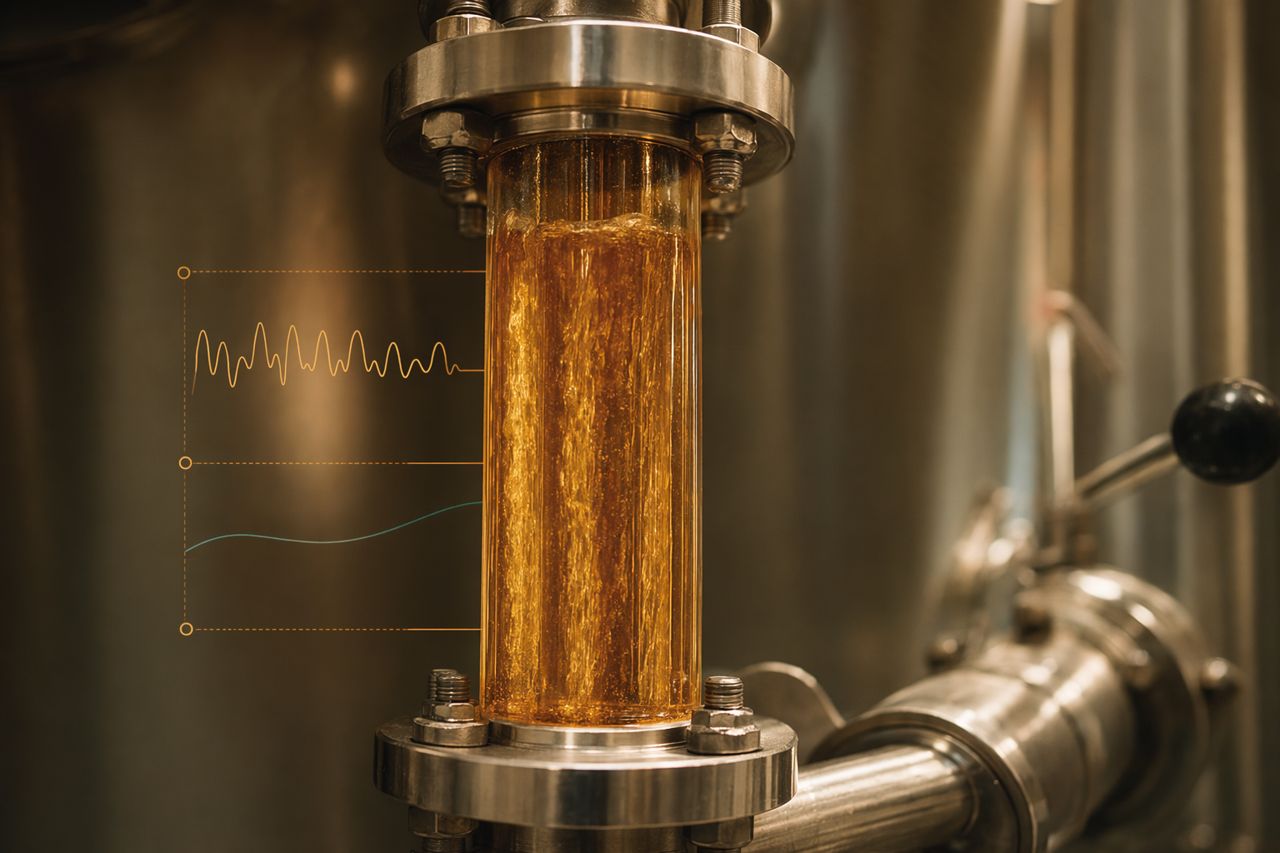
3. Lautering and runoff behavior
Lautering is where many mash problems become visible. Good notes here are often more valuable than a long list of disconnected measurements.
Capture:
- Vorlauf clarity and time to steady runoff
- Bed set behavior
- Runoff speed observations
- Sticking, channeling, compaction, or pump sensitivity
- Rake use or manual intervention
- Sparge behavior
- Kettle fill predictability
A short note such as "bed compacted early after first third of runoff" is far more useful than simply writing "slow lauter." The more specific observation points to a better next step.
4. Wort and kettle outcomes
The kettle gives another checkpoint for whether the mash behaved as expected.
Capture:
- Pre-boil gravity and volume
- Kettle fill timing
- Wort clarity trend by recipe
- Extract compared with recipe expectation
- Any boil performance issue tied to wort composition
For breweries using enzyme solutions, kettle-side outcomes help confirm whether mash adjustments are improving brewhouse yield without creating downstream problems.
5. Fermentation response
Enzyme-related process changes often show up in fermentation. Documentation should connect the brewhouse to the cellar.
Capture:
- Original gravity and target range
- Yeast pitch and generation context
- Fermentation start behavior
- Attenuation trend
- Diacetyl clearance timing when relevant
- Final gravity compared with brand target
- Sensory notes on body, dryness, malt expression, and balance
A process change that improves runoff but pushes a beer outside its flavor target is not a win. Flavor protection belongs in the documentation.
How to document enzyme trials without overcomplicating the brewery
Enzyme trials should be structured enough to produce a decision, but simple enough that the team will actually follow the plan.
Define the production problem
Be specific. Examples:
- Slow runoff on high-wheat seasonal
- Variable attenuation on core pale ale
- Low extract from a new malt lot
- Heavy mash viscosity on adjunct stout
- Inconsistent fermentability after grist adjustment
Avoid vague goals like "make the mash better." A good trial starts with a clear operational pain point.
Keep the recipe stable where possible
If you change malt lot, mash schedule, crush, water profile, and enzyme approach all at once, the data will not tell you much.
For a clean comparison, keep as many variables steady as practical:
- Same recipe and brewhouse
- Same operator notes where possible
- Same target mash profile
- Same yeast handling for fermentation comparison
- Same sensory review format
Real breweries are not laboratories, and that is fine. The goal is not perfection. The goal is usable production evidence.
Record the process intent
For every enzyme use, write down why it was used.
Examples:
- Support lautering on high beta-glucan grist
- Improve fermentability while preserving malt balance
- Help convert adjunct starch contribution
- Improve extract consistency across malt variation
- Reduce viscosity for smoother transfer and runoff
Intent matters because the right success metric depends on the problem being solved.
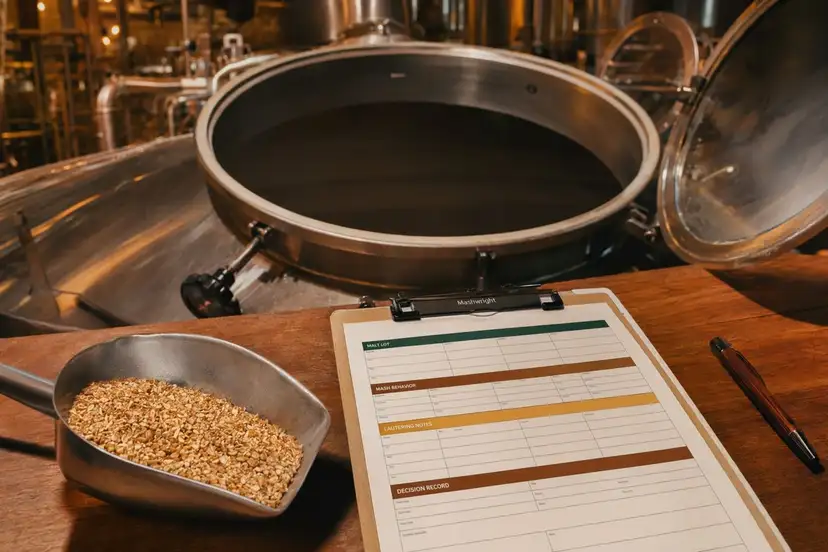
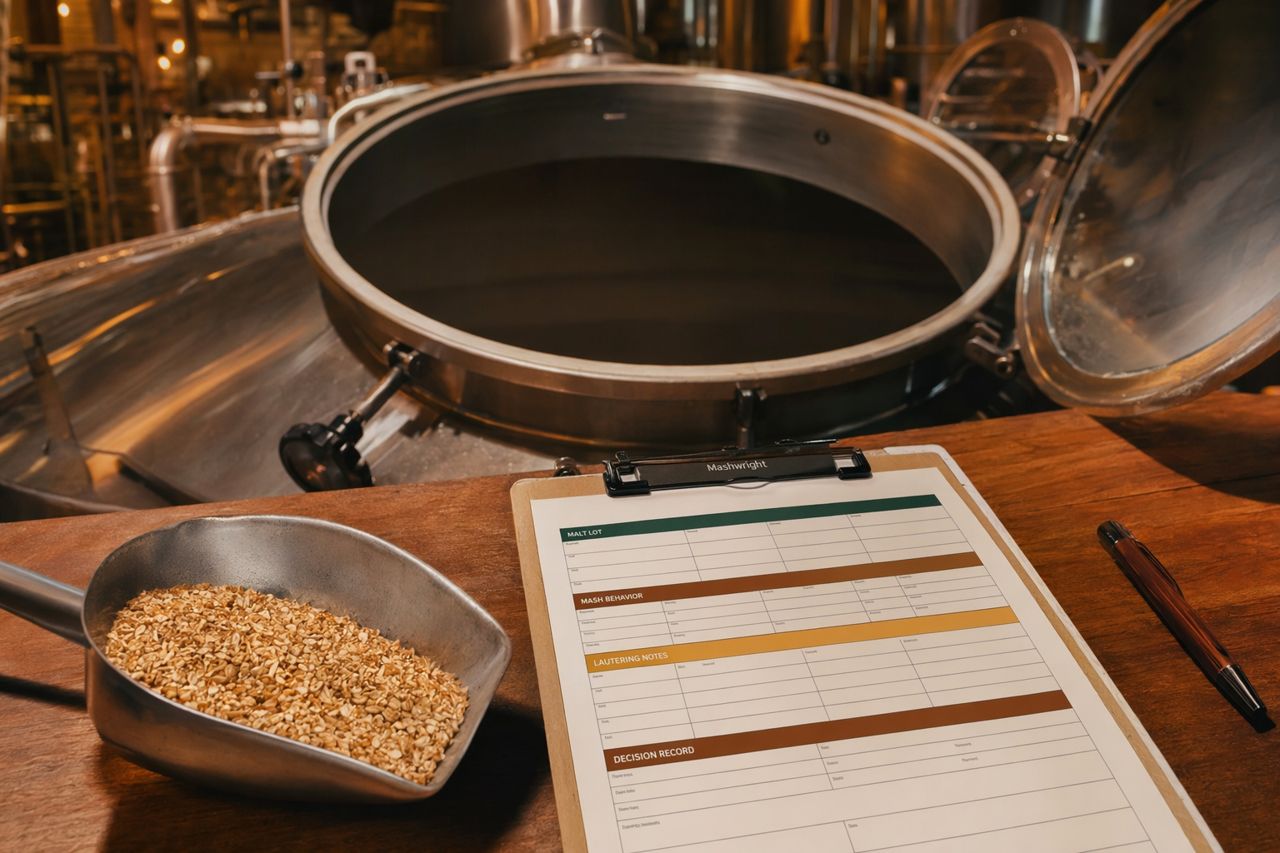
A practical brewery documentation template
Use a format your brewers can fill out during production without slowing the day down.
Brewhouse record
- Beer name and batch identification
- Date and operator
- Malt and adjunct lots
- Crush notes
- Mash schedule target and actual behavior
- Enzyme product and addition point, if used
- Mash visual notes
- Lauter start, bed behavior, runoff notes, and interventions
- Pre-boil volume and gravity
- Kettle fill timing
- Brewhouse yield notes
Cellar record
- Wort into fermenter notes
- Yeast pitch context
- Fermentation start timing
- Gravity trend
- Final gravity
- Sensory notes at key checkpoints
- Packaging readiness notes
Decision record
This is the section many breweries miss.
After the beer is evaluated, write one of the following:
- Repeat the same process
- Adjust enzyme use
- Adjust mash profile
- Adjust crush or lauter approach
- Re-test due to unrelated process variation
- Stop the trial because the result does not fit the brand target
A decision record turns notes into brewery knowledge.
What good notes look like
Weak note:
- "Mash was thick. Lauter slow."
Better note:
- "High-wheat grist showed heavy mash movement during first rest. Vorlauf took longer to clear than typical. Bed compacted after runoff started, requiring reduced pump draw. Finished kettle fill later than target. Fermentation finished in expected range, but beer held desired body. Repeat trial with same enzyme approach and compare against next wheat lot."
The better note gives the next brewer a useful starting point.
Using documentation to protect flavor
Process improvement should not flatten the beer.
For craft breweries, enzyme decisions should be judged against both production and sensory targets. A more fermentable wort may be useful in one beer and wrong for another. A smoother runoff may be valuable, but not if it changes body, head retention, or malt impression beyond the brand spec.
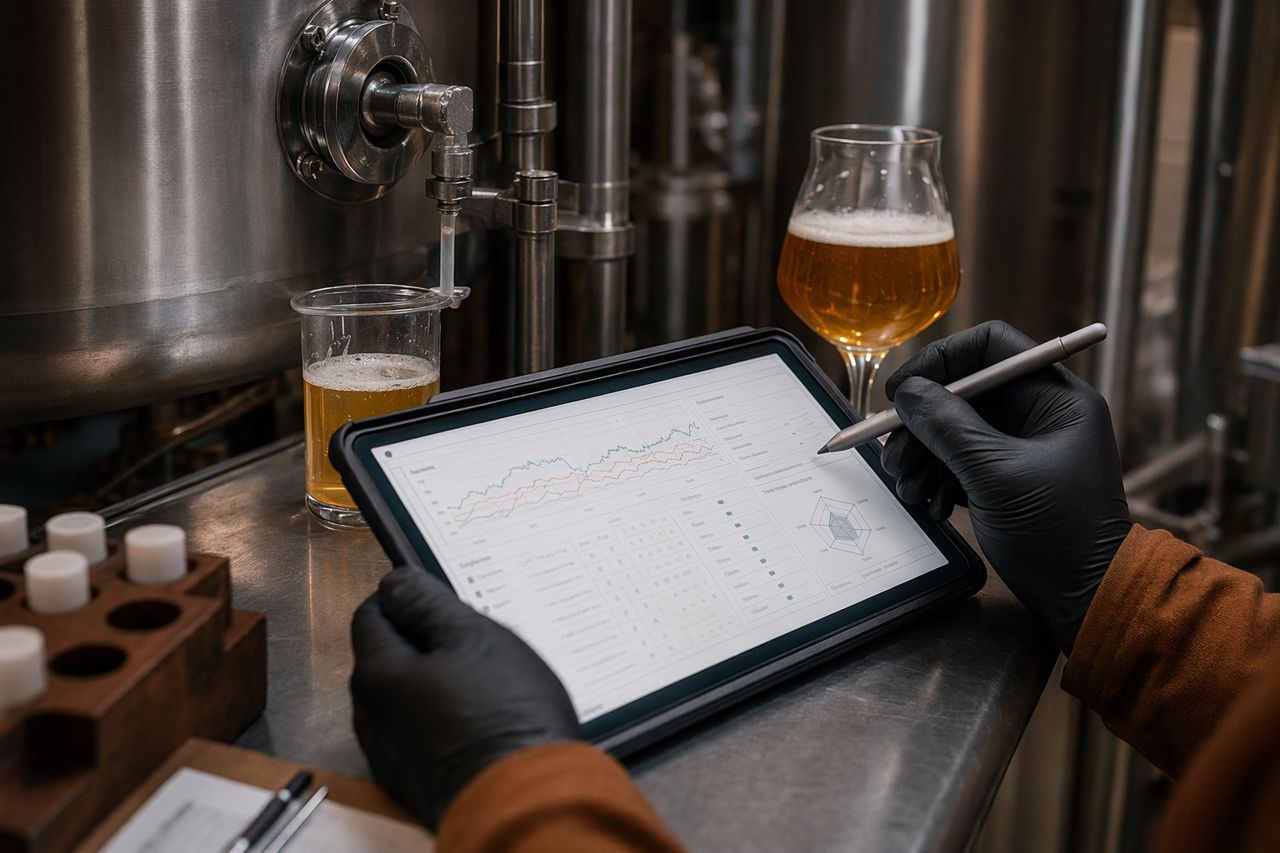
Build sensory language into your process review:
- Malt sweetness
- Body and fullness
- Finish dryness
- Foam stability impression
- Hop balance
- Any unusual thinness or sharpness
- Brand fit compared with the reference batch
This keeps the conversation grounded in the beer, not just the brewhouse numbers.
When to bring in an enzyme supplier
A process-literate supplier should help you interpret brewery conditions, not just sell a product.
Talk with Mashwright when you are seeing:
- Repeated lauter slowdown on specific grists
- Extract inconsistency across malt lots
- Adjunct-heavy recipes that are hard to run predictably
- Fermentation targets that drift by season or supplier lot
- A need to improve yield without compromising beer character
- A new core beer that needs a repeatable process before scale-up
As a brewing enzyme supplier for craft breweries, we focus on practical production fit: what your brewhouse is doing, what your beer needs to remain, and how to trial enzyme support with clear decision points.
The brewer-to-brewer takeaway
Documentation does not need to be complicated. It needs to be consistent, specific, and tied to decisions.
Capture what changed. Record what the mash, lauter, wort, and fermentation actually did. Protect the sensory target. Then use the next batch to confirm the lesson.
That is how brewhouse notes become repeatable production decisions.
Request a quote
If you are evaluating enzyme support for lautering, fermentability, extract consistency, or adjunct-heavy recipes, Mashwright can help match the solution to your brewery process.
Request a quote through the on-site form and tell us what you are brewing, where the process is pushing back, and what outcome you need from the next batch.