Lauter Tun vs. Mash Filter: Process Tradeoffs for Adjunct-Heavy Craft Breweries
Adjunct-heavy brewing can be a smart way to build flavor, manage raw material cost, and open up new beer styles. It can also expose every weakness in your brewhouse separation step.
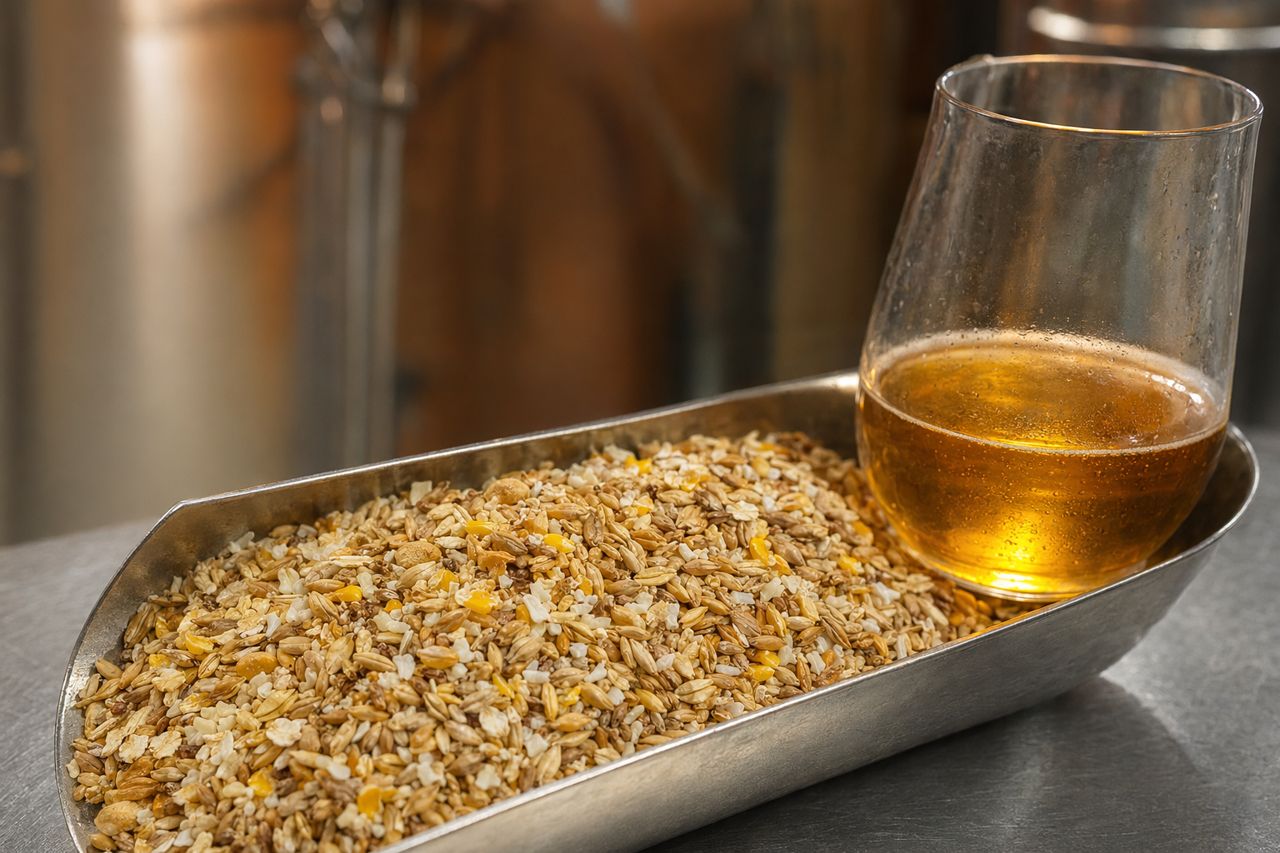
Rice, corn, oats, wheat, rye, sorghum, unmalted barley, high-protein grists, and specialty grains all change how the mash behaves. Some increase viscosity. Some bring more beta-glucan and pentosan load. Some reduce husk structure. Some drive starch carryover if gelatinization and conversion are not well aligned.
That is where the lauter tun vs. mash filter decision becomes more than an equipment conversation. It becomes a process-design conversation.
Mashwright works as a brewing enzyme supplier for craft breweries that need better mash performance, smoother run-off, predictable fermentability, and flavor-safe extract gains without turning the brewhouse into a science project.
The core difference: bed filtration vs. pressure filtration
A lauter tun and a mash filter both separate sweet wort from spent grain. They just ask the grist to behave in very different ways.
Lauter tun
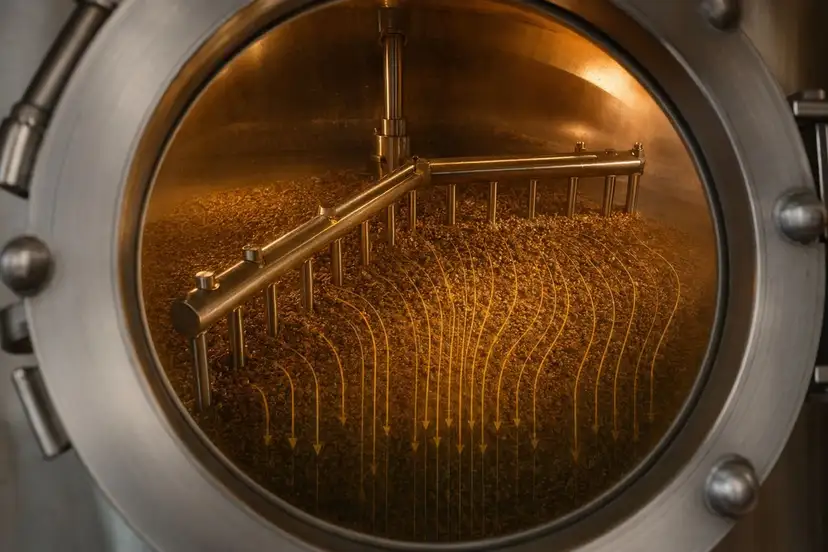
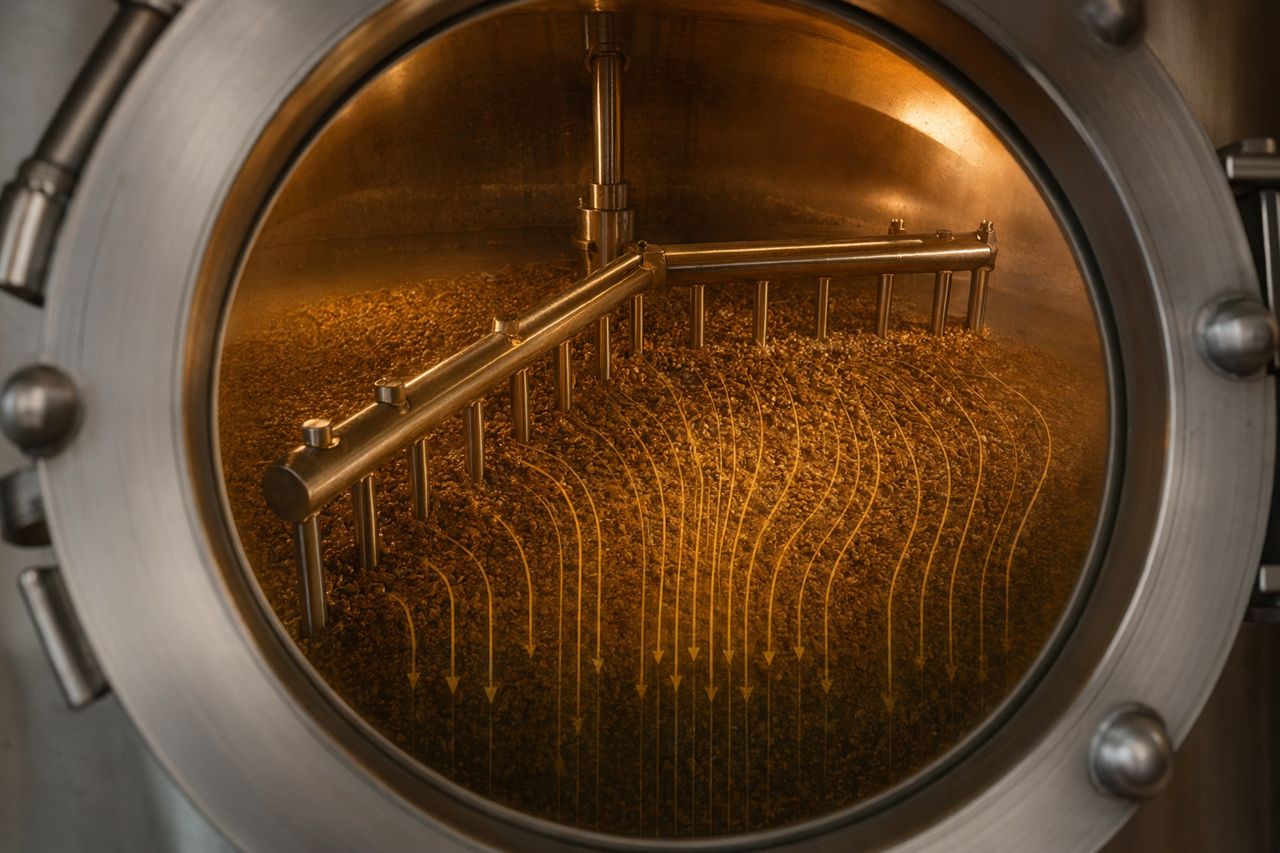
A lauter tun relies on the grain bed itself as the filter. The husk layer, mash porosity, rake program, rest profile, and wort viscosity all matter.
For all-malt beers with a healthy husk fraction, this is familiar and forgiving. For adjunct-heavy beers, the bed can compact, blind, channel, or drain unevenly.
Mash filter
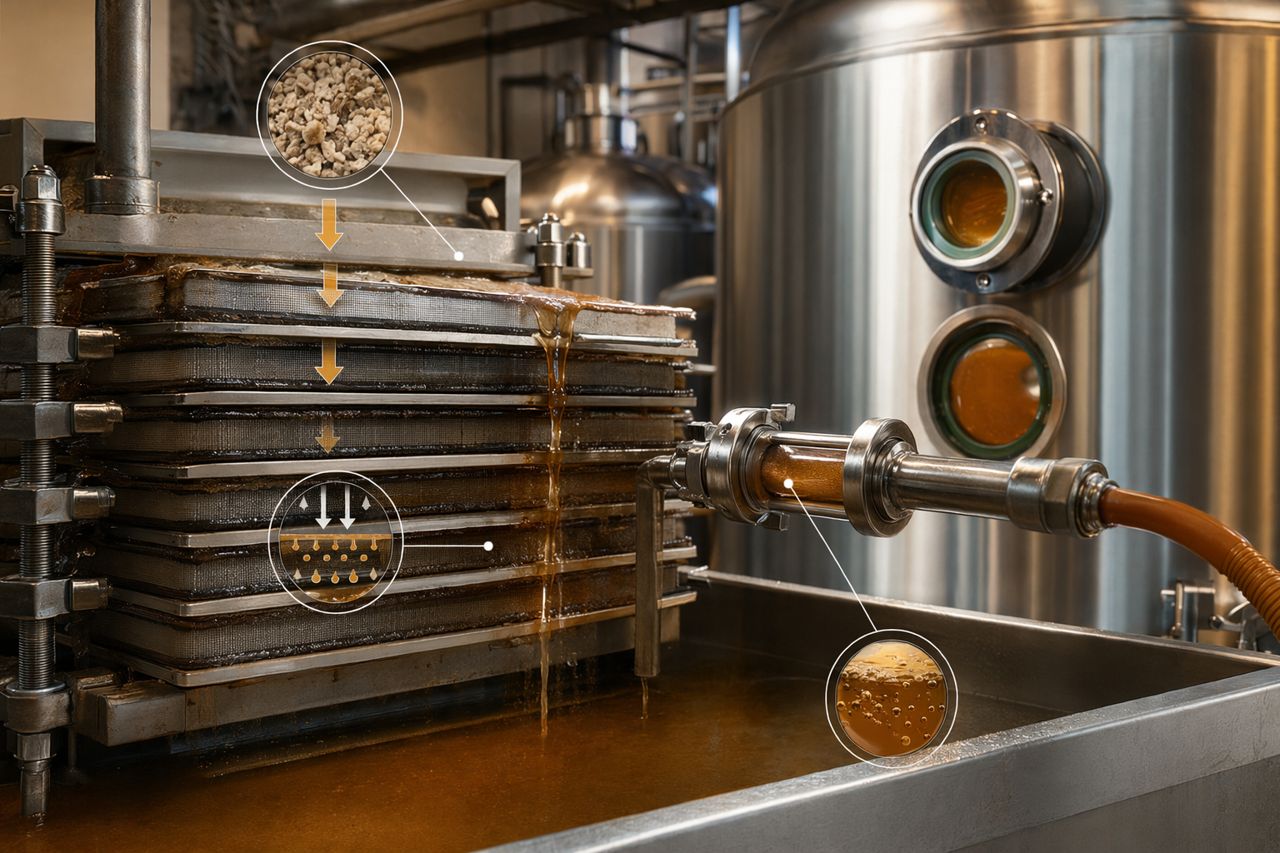
A mash filter uses chambers, membranes, plates, or filter cloth to separate wort under pressure. It does not need the same husk structure as a lauter tun and can handle finer milling.
That opens the door to higher extract recovery and more flexible raw material use, but it also demands tighter control of mash consistency, solids handling, and downstream clarity expectations.
Adjunct-heavy brewing changes the separation problem
When adjunct percentage rises, three things usually happen in the brewhouse:
- The mash gets thicker in behavior, even when liquor ratio stays familiar. Viscosity can climb from beta-glucans, arabinoxylans, proteins, and fine starch particles.
- The filter structure weakens. Less husk or more dehulled material means the lauter bed has fewer natural pathways.
- Conversion timing becomes less forgiving. Adjunct starch may gelatinize differently than malt starch, causing uneven extract release or increased carryover.
For the head brewer, the pain shows up as slow run-off, stuck mashes, high wort turbidity, inconsistent pre-boil gravity, longer brew days, and more operator intervention.
Where a lauter tun still makes sense
A lauter tun can work very well for adjunct brewing when the recipe, mill, rest program, and enzyme strategy are designed around it.
Advantages for craft breweries
- Familiar operation for most brew teams
- Lower complexity than a mash filter installation
- Strong fit for malt-forward beers and moderate adjunct levels
- Good flavor continuity when process changes are incremental
- Easier integration into existing brewhouse layouts
Process risks with high-adjunct grists
- Slower run-off from elevated mash viscosity
- Bed compaction when husk fraction drops
- Increased sensitivity to over-milling
- Higher chance of starch haze or extract loss if conversion is incomplete
- More variability batch to batch when adjunct quality changes
Enzyme support in a lauter tun process
For lauter tun breweries, enzymes are often used to protect flow and improve consistency, not to erase the character of the beer.
Common goals include:
- Reducing wort viscosity for smoother lautering
- Improving starch conversion across mixed grists
- Supporting fermentability targets without over-drying the beer
- Helping unlock extract from adjuncts while maintaining flavor balance
- Reducing the risk of slow or stuck run-off
The practical win is not just a better lab number. It is a calmer brew day, steadier kettle fill time, more consistent gravity, and fewer judgment calls at the lauter grant.
Where a mash filter has the edge
A mash filter becomes attractive when adjunct levels are high, raw material flexibility is important, or brewhouse throughput is constrained.
Advantages for adjunct-heavy production
- Can work with finer grist than a lauter tun
- Less dependent on husk structure
- Often supports higher extract recovery
- Can shorten separation time in well-tuned systems
- Gives breweries more freedom with unmalted grains and alternative cereals
For breweries scaling core brands with significant adjunct loads, a mash filter can turn raw material flexibility into a production advantage.
Process risks with mash filters
- Higher capital and integration complexity
- More sensitivity to mash homogeneity and solids profile
- Requires disciplined cleaning and cloth management
- Can create downstream changes in wort composition and clarity
- Less forgiving when mash viscosity is not controlled
A mash filter does not remove the need for enzyme strategy. In many breweries, it raises the value of getting that strategy right because the system is designed to push extract harder.
Enzyme strategy differs by separation system
The same adjunct bill can need different enzyme support depending on whether the brewery is using a lauter tun or mash filter.
In a lauter tun
The enzyme program often focuses on bed behavior and run-off reliability. The target is a mash that drains cleanly without stripping the beer of body or creating an overly thin finish.
Useful enzyme functions may include:
- Viscosity reduction from gums and cell-wall materials
- Support for starch breakdown and extract release
- Fermentability adjustment where attenuation is inconsistent
- Improved process tolerance when adjunct quality varies
In a mash filter
The enzyme program often focuses on fine-grist extract release, viscosity control, and predictable press performance. The mash needs to move, fill, separate, and rinse without becoming gluey or unstable.
Useful enzyme functions may include:
- Better access to starch in fine or alternative grists
- Reduced resistance during filtration
- Improved extract recovery from adjunct solids
- More consistent wort composition into the kettle
Flavor protection matters
Adjunct-heavy does not have to mean neutral, thin, or stripped down. A good enzyme plan should protect the beer you are trying to brew.
For a corn lager, that may mean clean fermentability without rough grain notes. For an oat-heavy hazy IPA, it may mean managing viscosity while preserving mouthfeel. For a rice-based light ale, it may mean reliable extract and crisp finish. For rye or wheat, it may mean keeping run-off under control without losing the grain’s signature texture.
The goal is process help that respects recipe intent.
Buyer checklist: choosing between lauter tun and mash filter
Before making equipment or process changes, ask these questions:
- What adjunct percentage are we really designing for? Occasional specialty batches and year-round high-adjunct production are different problems.
- Is our current bottleneck conversion, separation, or total brewhouse cycle time? Enzymes can help all three, but the right approach depends on the constraint.
- How variable are our raw materials? Adjunct source, grind, moisture, and pre-processing can change mash behavior quickly.
- Do we need more extract, more throughput, or more consistency? Each goal points to a different process priority.
- What beer character must be protected? Attenuation, body, haze, foam, and malt expression should be defined before trials begin.
- Can the team operate the system repeatably? A technically strong process still has to work on the floor during a busy production week.
Practical guidance by brewery situation
If you already have a lauter tun
Do not assume you need new equipment just because adjunct levels are rising. Start by reviewing mill setting, mash-in hydration, rest profile, rake operation, adjunct preparation, and enzyme support.
A targeted enzyme program can often improve flow, extract, and consistency while keeping the existing brewhouse intact.
If you are planning a brewhouse expansion
Model the beer portfolio, not just the equipment specification. If high-adjunct brands will become a major part of production, a mash filter may deserve serious evaluation.
At the same time, plan enzyme strategy early. It will influence mash profile, filtration behavior, wort quality, and expected yield.
If your brew day is inconsistent
Look for patterns. Slow first wort, uneven vorlauf, rising differential pressure, cloudy run-off, variable pre-boil gravity, and unexpected attenuation shifts all point to different root causes.
Mashwright can help translate those symptoms into a practical enzyme trial plan for the brewhouse.
How Mashwright supports adjunct-heavy brewers
Mashwright is built for production conversations with brewers. We help craft breweries select enzyme solutions around the actual job to be done:
- Faster, more reliable lautering
- Better extract from adjunct-heavy grists
- More predictable fermentability
- Lower viscosity in difficult mashes
- Smoother scale-up from pilot to production
- Batch-to-batch consistency when raw materials shift
- Flavor protection for the beer style, not just yield improvement
As a brewing enzyme supplier for craft breweries, we keep the conversation practical: your grist, your brewhouse, your target beer, and your production constraints.
Request a quote
Planning an adjunct-heavy beer, fighting slow run-off, or comparing lauter tun and mash filter options? Tell us about your grist, brewhouse setup, and production target.
Request a quote through the on-site form, and Mashwright will help match the enzyme approach to your process.