Oat-Heavy Beer Production: Why Hazy Recipes Challenge Runoff and Consistency
Oats have earned their place in modern hazy beer: soft mouthfeel, rounded malt texture, foam support, and the visual density drinkers expect from the style. But on the production side, oat-heavy grists can turn a smooth brew day into a slow, unpredictable one.
As a brewing enzyme supplier for craft breweries, Mashwright looks at oat-heavy beer through the brewhouse lens: mash viscosity, lautering behavior, extract recovery, fermentability, and flavor protection. The goal is not to make expressive beer more industrial. The goal is to help the recipe run the way the brewer intended, batch after batch.
{{ explainer_video }}
Why oats behave differently in the brewhouse
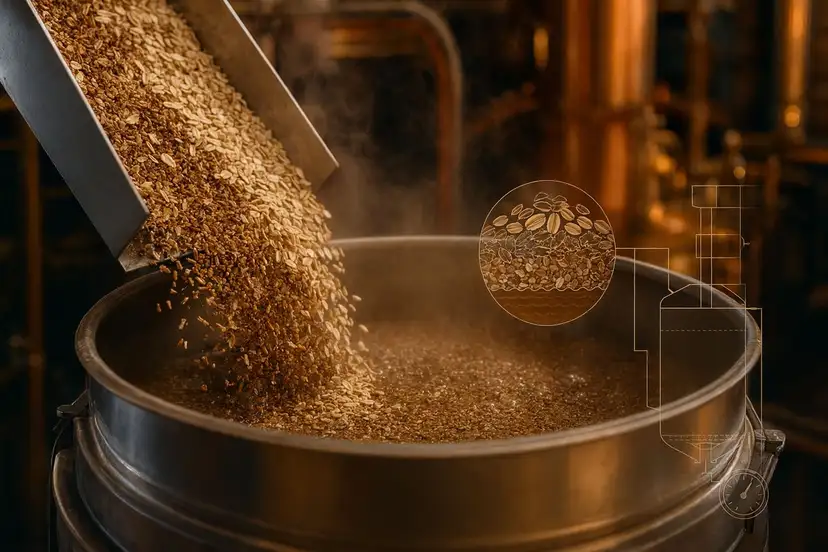
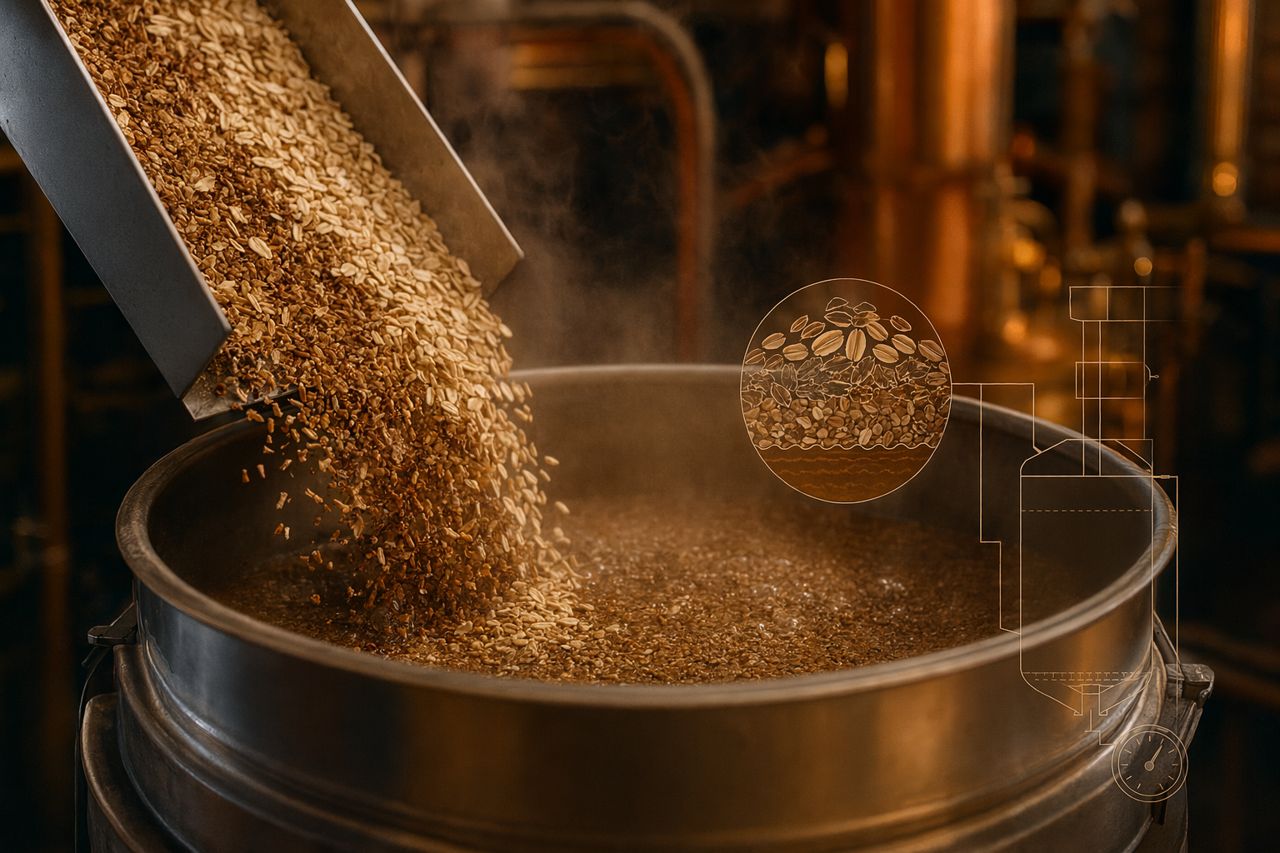
Oats bring valuable sensory character, but they also add material that can make the mash harder to move and separate. In oat-heavy hazy recipes, the challenge is usually not one single variable. It is the combined effect of:
- Higher beta-glucan contribution
- Fine particulate load from flaked or rolled adjuncts
- Protein-rich material that supports haze but can complicate separation
- Reduced husk structure compared with all-barley grists
- Higher mash viscosity that slows wort movement through the bed
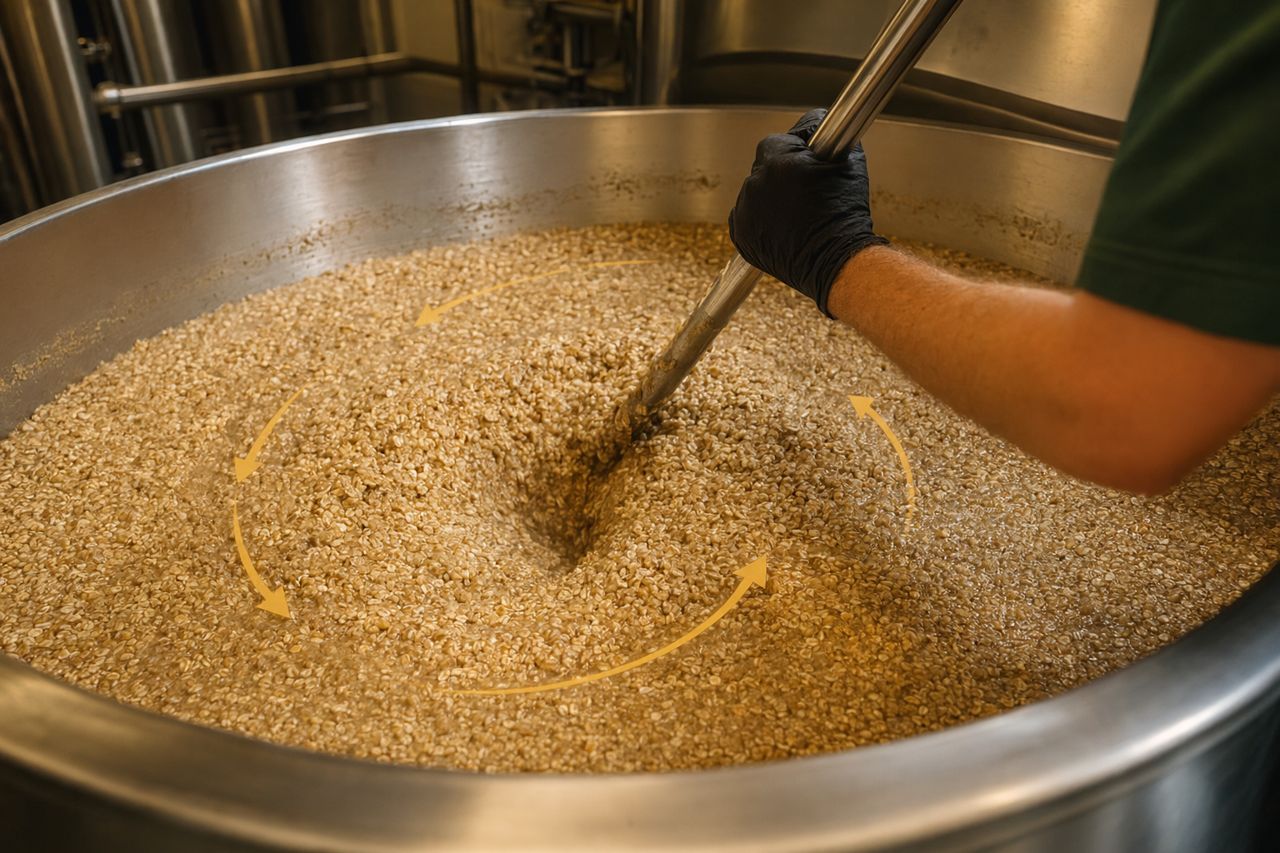
That combination can affect the whole hot-side rhythm: mash mixing, recirculation clarity, runoff speed, kettle fill timing, and extract consistency.
The common production symptoms
Head brewers usually notice oat-heavy grist pressure in a few practical ways.
Slow or uneven runoff
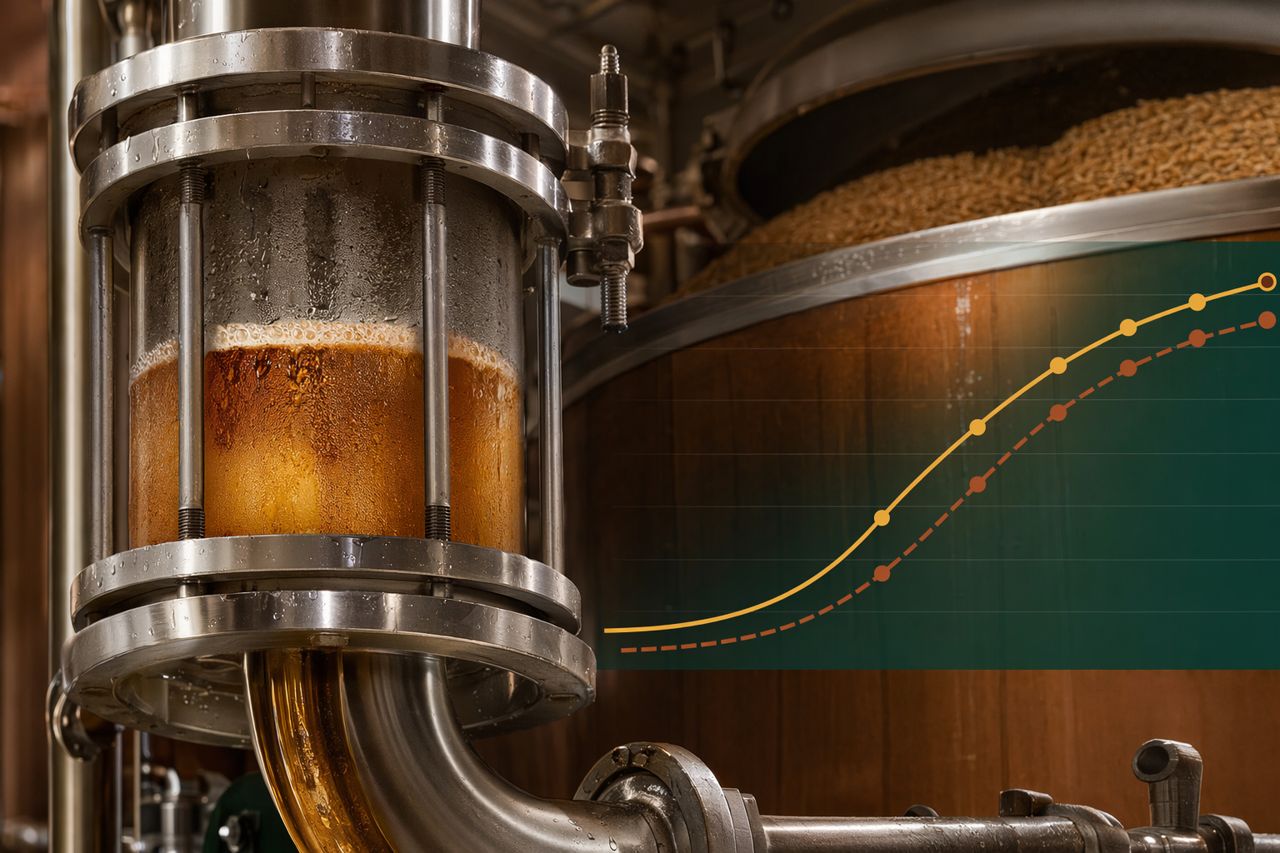
The lauter bed can tighten early, especially when the grist has limited husk support. Even if the mash converts well, wort may not move cleanly through the bed. The result is a slower transfer, more operator attention, and a higher chance of making mid-run adjustments.
Viscosity that changes from batch to batch
Two oat-heavy brews can behave differently even with the same recipe. Malt lot variation, adjunct format, crush profile, hydration, and mash handling can all shift viscosity. That is why brewers often describe these beers as “the same on paper, different in the tun.”
Extract that does not track cleanly
When runoff is stressed, extract recovery can become less predictable. The issue may show up as lower brewhouse yield, a longer sparge, or a decision to stop collection before the run becomes too inefficient.
Fermentability drift
Oat-heavy recipes can expose weak points in starch conversion, especially when adjunct loading is high or the mash schedule is built around body and haze. The brewer may see attenuation move outside the expected band, even when yeast performance is otherwise healthy.
Where enzyme strategy fits
A good enzyme approach does not replace brewing discipline. It supports it.
For oat-heavy beer production, enzyme selection is usually aimed at three practical outcomes:
- Lower mash viscosity so the mash moves and separates more predictably.
- Support starch conversion so fermentability stays aligned with the recipe target.
- Protect the intended beer character so softness, haze, body, and aroma remain in the brewer’s control.
Viscosity management
Beta-glucan- and arabinoxylan-focused support can help reduce the gum-like load that slows mash movement. In practice, that can mean easier recirculation, less bed compaction, and a more manageable runoff.
The value is not only speed. It is confidence. When runoff behavior is steadier, the brewhouse team can spend less time correcting the process and more time brewing the beer as designed.
Fermentability control
Targeted starch-conversion support can help oat-heavy recipes stay consistent when malt modification, adjunct percentage, or mash profile varies. This is especially useful when the beer needs a soft finish without becoming under-attenuated, heavy, or unpredictable in package.
Yield and capacity protection
Slow runoff is not just a process inconvenience. It can reduce effective brewhouse capacity. If an oat-heavy brand ties up the lauter tun, pushes kettle timing, or forces longer turns, the cost shows up in scheduling and labor.
A process-literate enzyme plan can help protect throughput while keeping the beer’s malt-forward and hazy identity intact.
What not to do
Oat-heavy beer does not benefit from a “more enzyme is better” mindset. Overcorrection can create its own problems: body loss, flavor mismatch, or a beer that no longer drinks like the original concept.
A practical approach starts with the production problem:
- Is the issue mash thickness?
- Is the issue runoff speed?
- Is extract recovery inconsistent?
- Is attenuation drifting?
- Is the beer losing its intended mouthfeel?
The right enzyme plan depends on the grist, process, and finished-beer target — not just the style name.
How Mashwright scopes oat-heavy beer support
Mashwright works brewer-to-brewer with craft breweries that need enzyme support matched to real production conditions. For oat-heavy hazy recipes, we typically review:
- Grist structure and oat percentage
- Oat format and supplier variation
- Malt modification and crush behavior
- Mash schedule and mixing constraints
- Lauter tun design and bed depth tendencies
- Whirlpool, fermentation, and package goals
- Flavor, haze, body, and attenuation targets
From there, we help identify where enzyme support can create the most value: viscosity reduction, conversion stability, runoff consistency, or overall brewhouse efficiency.
The brewer’s goal: repeatable softness
The best oat-heavy beers feel relaxed in the glass, but they should not feel chaotic in production. A well-scoped enzyme strategy helps keep the soft texture, stable haze, and malt-adjunct expression while reducing the friction that slows the brewhouse down.
For a growing craft brewery, that can mean:
- More predictable lauter performance
- Better batch-to-batch extract consistency
- Fewer emergency process adjustments
- Cleaner production scheduling
- More reliable attenuation outcomes
- Less risk of compromising flavor to solve a process problem
Request a quote
If oat-heavy hazy recipes are slowing your runoff, tightening your lauter bed, or moving your attenuation target, Mashwright can help you evaluate the right enzyme approach for your brewhouse.
Request a quote through the on-site form and tell us about your grist, process challenge, and production goal.