Rice and Corn Adjunct Lagers in Craft Brewing: Process Lessons from a Growing Segment
Light, crisp adjunct lagers are no longer just a legacy macro style. More craft breweries are building premium rice lagers, corn lagers, Mexican-style lagers, and easy-drinking house beers that keep the malt character clean while improving refreshment, clarity, and repeat purchase.
For the brewhouse, the challenge is simple to describe and easy to underestimate: rice and corn change the mash. They can improve drinkability and cost structure, but they also shift gelatinization behavior, dilute malt enzyme contribution, alter wort nitrogen, and expose weaknesses in lautering and fermentation control.
Mashwright works as a brewing enzyme supplier for craft breweries that want adjunct lager flexibility without giving up process discipline, yield, or flavor intent.
Why rice and corn are back in craft lager programs
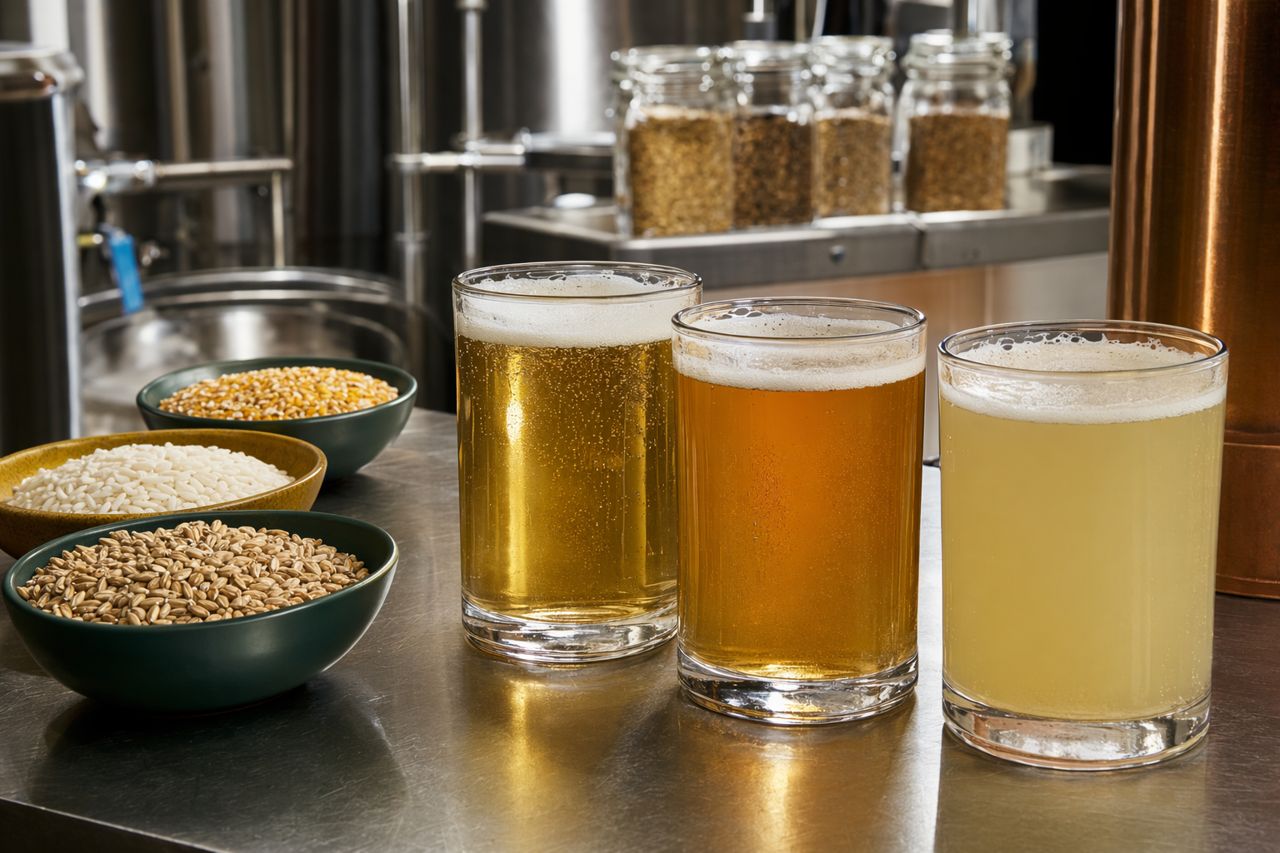
Adjunct lagers fit a growing need in the taproom and wholesale cooler: bright beer, moderate body, high repeatability, and a clean finish. Rice and corn can help create that profile when they are treated as functional brewing materials, not filler.
Common motivations include:
- Lighter body and drier finish without pushing harsh bitterness or stripping all malt identity.
- Improved drinkability for warm-weather, event, and high-volume taproom pours.
- Style expansion into American light lager, Mexican-style lager, Japanese-inspired rice lager, cream ale, and pre-Prohibition-influenced recipes.
- More predictable cost inputs when adjunct sourcing is stable and formulation is built correctly.
- Clearer brand separation between a craft lager and a commodity lager through malt selection, fermentation discipline, and subtle flavor design.
The opportunity is real. So are the process tradeoffs.
Rice and corn behave differently in the brewhouse
Rice and corn are often grouped together as cereal adjuncts, but they do not behave identically.
Rice: neutral, crisp, and process-sensitive
Rice contributes a clean, dry impression and can support a highly polished lager profile. It is low in husk material and relies heavily on the malt bill and process aids to keep conversion and wort movement reliable.
Brewers often choose rice when they want:
- A crisp finish with minimal cereal sweetness.
- A lighter palate without obvious adjunct aroma.
- A clean canvas for delicate hop, yeast, or malt notes.
The main process watchouts are starch accessibility, conversion completeness, and wort body that does not collapse into thinness.
Corn: rounder, familiar, and more flavor-present
Corn can contribute a soft sweetness, rounder mid-palate, and classic lager familiarity. Depending on form and handling, it may be easier to integrate than raw rice, but it still affects mash balance.
Brewers often choose corn when they want:
- A softer grain impression than rice.
- A balanced adjunct character in cream ales and American lagers.
- A familiar lager profile with a slight cereal warmth.
The main process watchouts are consistent attenuation, stable flavor expression, and avoiding wort that feels heavy before fermentation but finishes unpredictably.
The process questions head brewers should ask first
Before selecting an enzyme approach, define the target beer in production terms.
1. What finish are you trying to build?
A rice lager may need a very clean, dry finish. A corn lager may need a softer finish with enough body to avoid tasting hollow. Enzyme selection should support the desired fermentability curve, not simply drive maximum dryness.
2. How much adjunct can your mash system handle?
High-adjunct grists can expose lauter tun limits, mash mixer limitations, and heat transfer unevenness. The same recipe may behave differently in a small pilot mash, a 15-barrel brewhouse, and a larger production system.
3. Are you protecting flavor or chasing extract only?
Extract matters, but adjunct lager buyers judge the beer by clean fermentation, fresh aroma, foam, clarity, and repeatable finish. A good enzyme plan protects the sensory goal while helping the brewhouse run efficiently.
4. Is the malt doing enough work on its own?
Adjuncts dilute the enzymatic strength and nutrient contribution of the malt portion. Depending on grist design, mash schedule, and malt choice, supplemental enzymes may help keep conversion, viscosity, and fermentability within a predictable window.
Where brewing enzymes fit in adjunct lager production
Enzymes are not a shortcut around brewing fundamentals. They are process tools that help the brewer control specific variables in the mash and wort.
For rice and corn adjunct lagers, the relevant functions often include:
- Starch conversion support to help make adjunct starch accessible and convertible under brewery conditions.
- Fermentability shaping to reach the intended dry finish without erasing all palate structure.
- Viscosity reduction to improve wort separation, runoff behavior, and brewhouse rhythm.
- Extract consistency when raw material variation or adjunct percentage creates batch-to-batch spread.
- Flavor protection by reducing process stress, avoiding overcorrection, and keeping the recipe aligned with the target profile.
The best enzyme program is not the most aggressive one. It is the one that helps the beer land in spec, tank after tank.
Mash lessons from successful rice and corn lagers
Build the grist around the final beer, not only the cost sheet
A good adjunct lager starts with a clear sensory target. The base malt still carries much of the beer’s identity. Adjunct percentage, malt selection, and mash strategy need to work together.
For a premium rice lager, a brewer may prefer a clean base malt and restrained specialty input. For a corn lager, the brewer may allow a rounder malt note and slightly more mid-palate softness. In both cases, enzyme use should support that target instead of pushing every beer toward the same dry finish.
Respect gelatinization and starch accessibility
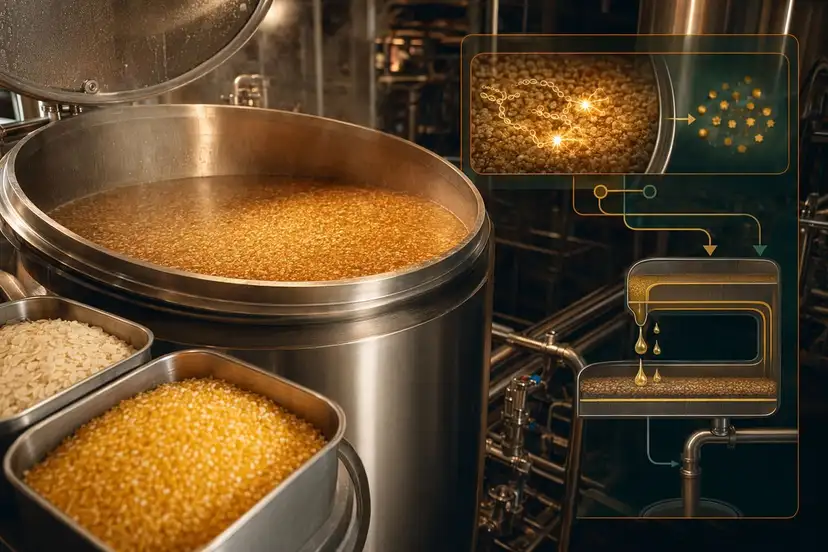
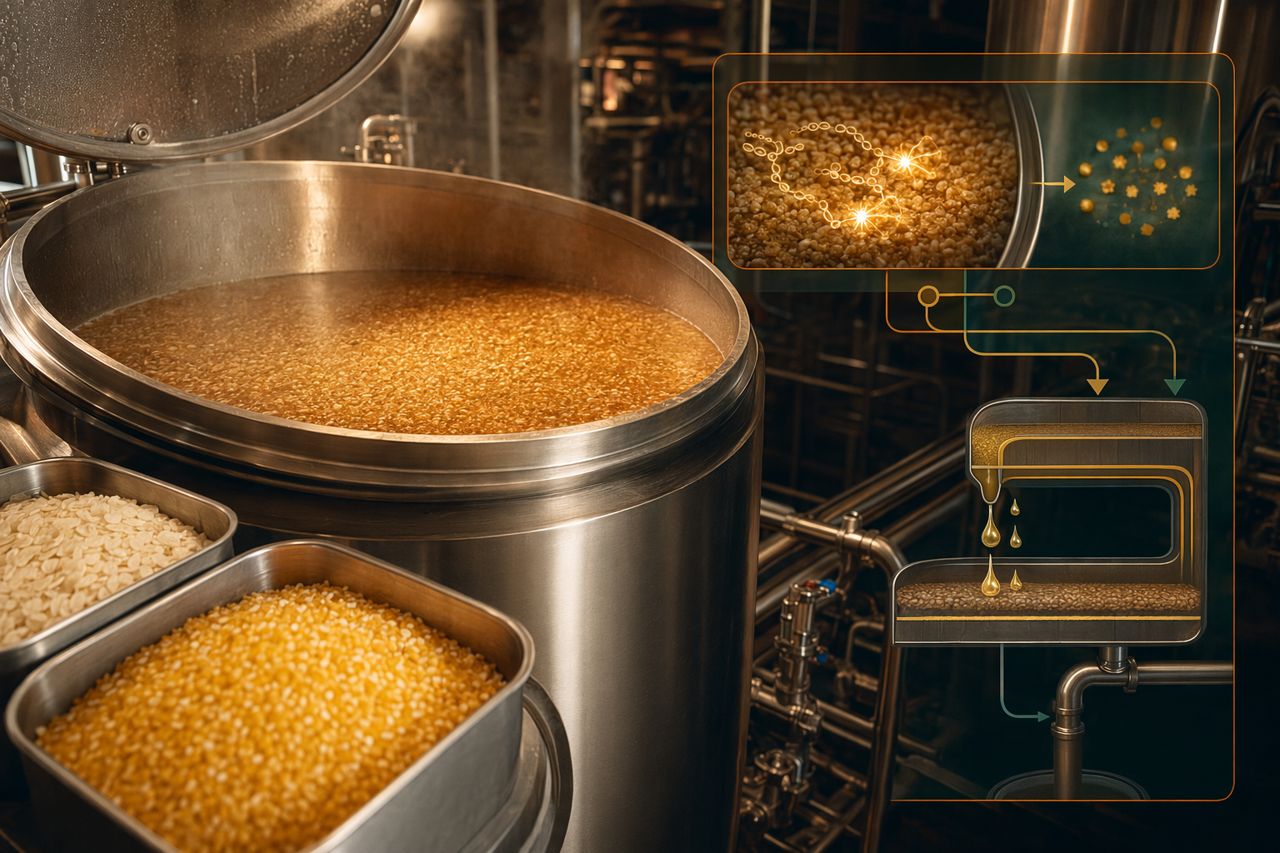
Rice and corn starch must be accessible before enzymes can do useful work. Brewers using flaked, pre-gelatinized, torrefied, or cereal-cooked adjuncts should understand how each format changes mash behavior.
If starch access is inconsistent, the brewery may see:
- Lower or variable extract.
- Haze instability from incomplete conversion.
- Slower runoff.
- Fermentation variation between batches.
- Unplanned sweetness or body.
A practical enzyme plan should match the adjunct form and the brewhouse reality.
Do not ignore lautering
Adjunct lagers can look simple on paper and still slow the brewhouse down. Less husk contribution, fine adjunct particles, and high soluble load can affect the grain bed and wort flow.
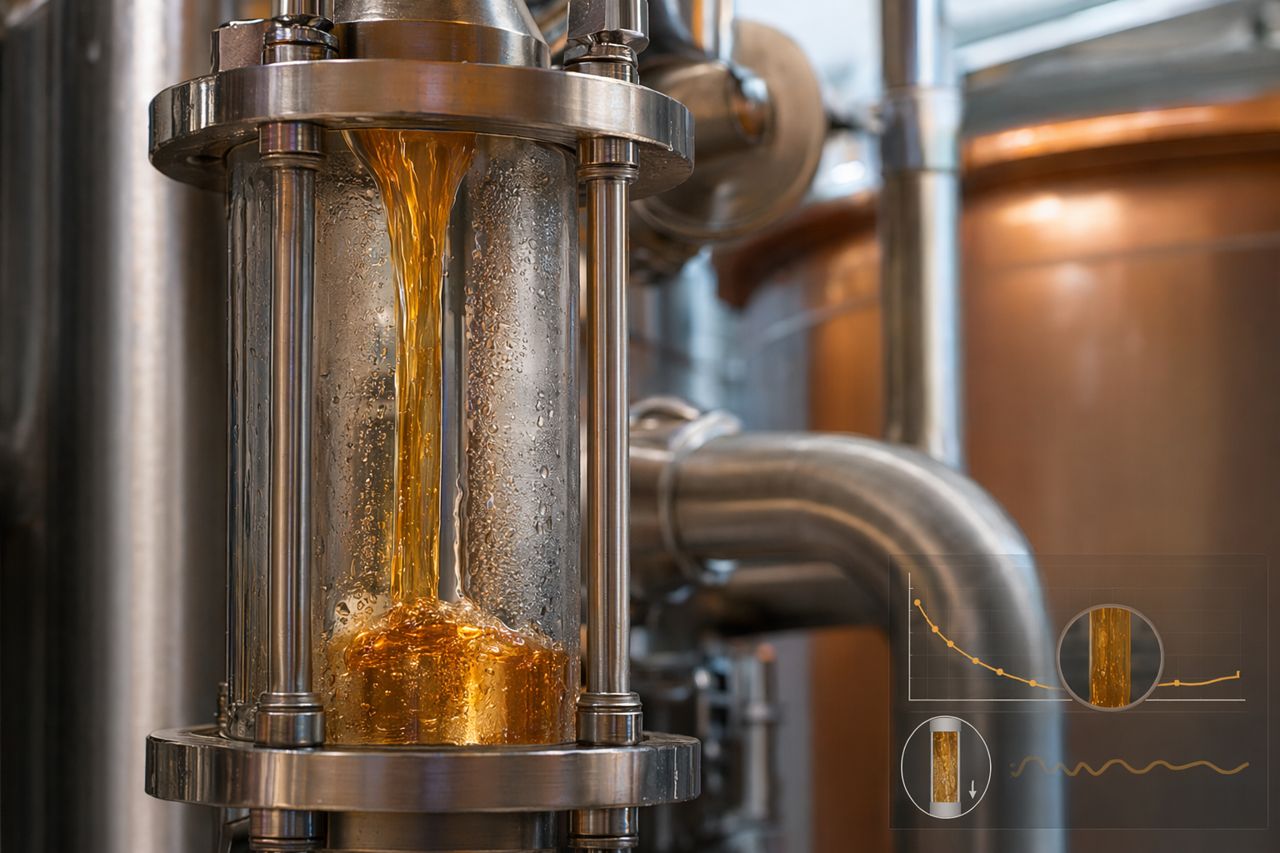
Enzymes that reduce viscosity and support a cleaner runoff can help protect production time. That value is not just higher yield; it is fewer stuck mashes, more predictable turns, and less operator intervention on busy brew days.
Manage fermentability with intention
Adjunct lager success depends on the finish. Too much residual body can make the beer taste dull. Too much fermentability can make it thin, sharp, or out of balance.
Mashwright’s approach is to help brewers define the intended attenuation profile first, then choose enzyme support that fits the recipe, yeast strain, fermentation schedule, and flavor target.
Watch foam, freshness, and mouthfeel
A clean adjunct lager still needs foam quality and palate integrity. Enzyme use should not be treated as a blunt instrument. The goal is to improve process control while protecting the beer’s presentation in the glass.
Good process choices help maintain:
- Clean malt-adjunct balance.
- Stable foam appearance.
- Bright aroma without process-derived roughness.
- A finish that feels crisp, not empty.
- Repeatable sensory performance across batches.
Practical use cases for craft breweries
Premium rice lager
Goal: very clean aroma, crisp finish, pale color, high drinkability.
Potential enzyme value:
- Support complete conversion of adjunct starch.
- Shape fermentability for a dry but balanced finish.
- Improve extract consistency across rice lots.
- Keep lautering predictable in a low-husk grist.
Mexican-style corn lager
Goal: bright, refreshing lager with soft grain character and reliable drinkability.
Potential enzyme value:
- Support consistent extract with corn-heavy grists.
- Improve wort flow and kettle-ready runoff.
- Manage fermentability without flattening the beer.
- Reduce batch variation during seasonal volume spikes.
Cream ale with corn adjunct
Goal: clean ale fermentation, gentle corn sweetness, smooth body, fast production rhythm.
Potential enzyme value:
- Improve mash performance in mixed grists.
- Help control finishing gravity and palate balance.
- Maintain brewhouse efficiency during quick-turn production.
- Support consistency when the beer is a taproom staple.
Light craft lager or house lager
Goal: approachable, crisp, margin-aware beer that still tastes intentional.
Potential enzyme value:
- Improve extract yield from a cost-sensitive grist.
- Reduce runoff variability.
- Help achieve target dryness and clarity.
- Protect repeatability as volume grows.
What to avoid when developing an adjunct lager
- Treating adjuncts as neutral by default. Rice and corn both affect process and flavor structure.
- Assuming a pilot batch will scale cleanly. Lautering and heat transfer can change quickly at production scale.
- Using enzymes without a target. Decide whether the priority is conversion, viscosity, fermentability, yield, or consistency.
- Over-drying the beer. Crisp is not the same as thin.
- Ignoring yeast nutrition. Adjunct-heavy grists can change fermentation behavior beyond mash conversion.
- Chasing extract at the expense of sensory quality. A lager that yields well but drinks poorly will not help the brand.
How Mashwright supports adjunct lager programs
Mashwright helps craft breweries translate recipe goals into practical enzyme choices for the brewhouse. Our role is not to replace your brewing judgment. It is to give your team a more controlled process window when rice, corn, and other adjuncts become part of the lager platform.
We can help evaluate:
- Adjunct type and inclusion strategy.
- Mash schedule and conversion goals.
- Lautering and viscosity challenges.
- Fermentability targets by beer style.
- Repeatability across seasonal and year-round production.
- Quote requirements for brewery-scale purchasing.
As a brewing enzyme supplier for craft breweries, Mashwright focuses on production value: better runoff, steadier extract, cleaner fermentability, and beer that stays true to the brewer’s intended profile.
Request a quote for your adjunct lager program
If you are building a rice lager, corn lager, cream ale, or light craft lager, Mashwright can help you match enzyme function to your process goal.
Use the on-site request a quote form and tell us your beer style, adjunct type, approximate batch size, and the process challenge you want to solve. We will help you identify the right starting point for brewery-scale evaluation.